What Software Do Most Lawn Care Companies Use? (Industry Breakdown)
What Software Do Most Lawn Care Companies Use? (Industry Breakdown)
When you are trying to grow a landscaping business, it is natural to look over your shoulder and wonder what the competition is doing.
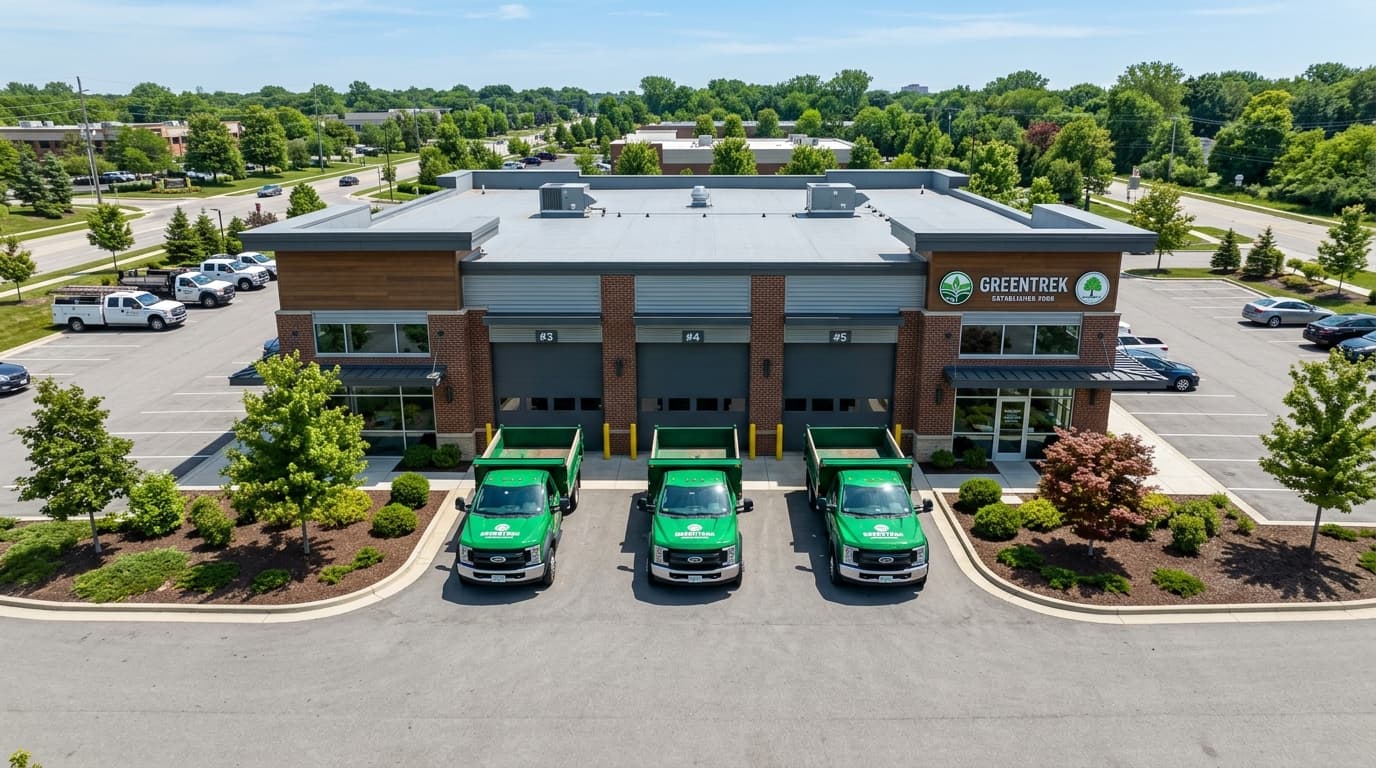
If you see a successful competitor with a fleet of five perfectly branded green trucks, you immediately wonder: How are they dispatching those crews? How are they routing them efficiently? What software do most lawn care companies actually use?
The answer depends entirely on the size of the company. The landscaping industry is massive and highly fragmented. A solo operator mowing 40 lawns a week has drastically different needs than a commercial firm maintaining 50-acre corporate campuses.
In this industry breakdown, we are going to look at the three distinct "tiers" of landscaping businesses, the software they use, and how you can position your own company for maximum growth.
Tier 1: The Solo Operator / Start-Up
Company Profile: 1-2 trucks, $50,000 to $250,000 in annual revenue. Primary Focus: Survival, acquiring new clients, and getting the work done.
If you look at the raw data, the vast majority of landscaping businesses in the United States fall into this category. And surprisingly, the most popular "software" used by these companies isn't software at all.
What They Use: Pen, Paper, and Spreadsheets
A staggering number of solo operators run their businesses on a combination of:
- A physical whiteboard in their garage.
- A spiral notebook sitting on the dashboard of their truck.
- A chaotic Excel spreadsheet or Google Sheet.
- Google Calendar (to remember appointments).
- Venmo or Zelle (to collect payments).
Why They Use It
It is free (mostly), and it requires zero learning curve. When you only have 30 clients, you can keep most of the schedule in your head. You know that Mrs. Smith likes her grass cut on Thursdays, and you know she pays by leaving a $50 bill under the doormat.
The Breaking Point
This "software" works perfectly right up until it doesn't. The breaking point usually happens around $150k in revenue. Suddenly, you have 80 clients. It rains on a Tuesday, and you have to manually text 15 different people to tell them you are coming on Wednesday instead. You lose track of who has paid and who hasn't. You start dropping the ball, and your stress levels skyrocket.
This is when operators realize they need real software.
Tier 2: The Scaling Small Business
Company Profile: 2-10 trucks, $250,000 to $2,000,000 in annual revenue. Primary Focus: Efficiency, route density, hiring, and protecting profit margins.
This is the sweet spot of the industry. These companies have figured out how to acquire customers, and their biggest challenge is operational efficiency. If they can route their crews 10% faster, their profit margins explode.
What They Use: Freemium & Mid-Market SaaS
In 2026, the software landscape for Tier 2 companies is dominated by modern, cloud-based applications. The three biggest names in this space are:
- YardStak: The rapidly growing freemium leader.
- Jobber: The popular generalist software.
- Service Autopilot (SA): The complex legacy platform.
Why They Use It
These companies need automation. They need a CRM that tracks every customer interaction. They need a drag-and-drop calendar that instantly pushes optimized routes to their crews' mobile phones. They need automated two-way texting, and they absolutely must have integrated credit card processing (storing cards on file for auto-billing).
Historically, these companies were forced to pay $200-$300 a month for platforms like Jobber or Service Autopilot.
However, in recent years, there has been a massive migration toward YardStak. Because YardStak offers enterprise-grade route optimization, a mobile app, and drag-and-drop scheduling for free, mid-sized operators are abandoning their expensive legacy subscriptions. They are realizing they can get all the operational horsepower they need without sacrificing thousands of dollars a year in subscription fees.
The Breaking Point
A Tier 2 company using a platform like YardStak or SA can scale comfortably for years. The only real breaking point comes if the company shifts aggressively away from residential/light-commercial maintenance and starts focusing entirely on massive, multi-million dollar commercial design-build projects that require extreme job-costing and HR integrations.
Tier 3: The Commercial Enterprise
Company Profile: 20+ trucks, $5,000,000+ in annual revenue. Primary Focus: Acquisitions, commercial contracts, intense job costing, and municipal compliance.
When a landscaping company reaches this size, it operates more like a corporate logistics firm than a traditional lawn care business. They have dedicated account managers, HR departments, and fleets of specialized equipment.
What They Use: Enterprise ERPs
The undisputed king of this tier is Aspire Software (now owned by ServiceTitan). Other players include LMN (Landscape Management Network) and custom-built Salesforce instances.
Why They Use It
At this scale, a company doesn't just need to know if a lawn was mowed. They need to know the exact cost of a specific type of mulch, factored against the fractional hourly rate of the employee spreading it, including their worker's comp burden, minus the depreciation of the skid steer used to load it.
They need incredibly deep estimating matrices. They need to integrate with massive accounting suites like Sage or advanced versions of QuickBooks Enterprise. They need chemical tracking that automatically generates compliance reports for the Department of Agriculture.
These software platforms are incredibly expensive (often costing tens of thousands of dollars a year in licensing and onboarding fees), but for a $20M company, that intense level of data granularity is what protects their razor-thin commercial margins.
Which Software Should You Choose?
The biggest mistake a landscaping business owner can make is choosing software built for a tier they are not in.
If you are a solo operator doing $100k a year, buying Aspire is financial suicide. You will spend all your time trying to configure complex estimating matrices instead of out there cutting grass.
Conversely, if you are running four trucks and doing $750k a year, trying to run your business on a whiteboard and Excel is operational suicide. You are bleeding money in unoptimized routes and forgotten invoices.
The YardStak Advantage for Tier 1 and Tier 2
The reason YardStak is rapidly becoming the software of choice for most lawn care companies in 2026 is that it perfectly bridges the gap between Tier 1 and Tier 2.
Because the core software is completely free, a solo operator can ditch their spreadsheets and start using professional route optimization and auto-billing on day one, without taking on a $150/month subscription burden.
As that solo operator grows into a 5-truck fleet doing $1M+ in revenue, YardStak scales with them effortlessly. They can add unlimited crew members, process thousands of credit card transactions, and even purchase optional AI-marketing add-ons to accelerate their growth.
Conclusion
Don't worry about what the $50M commercial firm down the street is using. Focus on the tools that will make your specific operation faster, leaner, and more profitable today.
If you are ready to graduate from spreadsheets, or if you are tired of overpaying for legacy software subscriptions, create your free YardStak account today and join the thousands of modern landscaping companies building their businesses on the industry's best platform.
Looking for more comparisons? Check out our breakdown of Free Landscaping Software vs. Paid or our Top Lawn Care Software for Small Businesses (2026 Comparison).